
 Live Radio
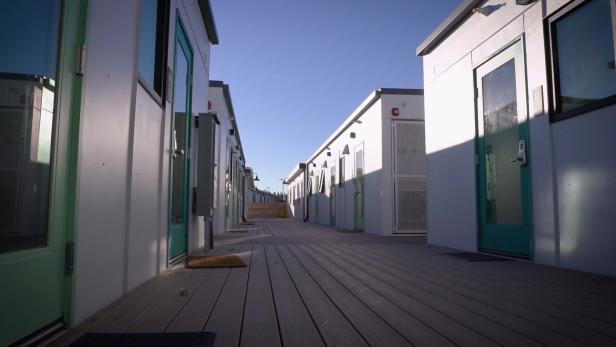 photo credit: Northern California Public Media
 Labath Landing, a 60‑unit Homekey site in Rohnert Park.
California has spent nearly four billion dollars on Project Homekey — the state’s effort to turn motels and other buildings into long‑term housing for homeless residents. A new CalMatters investigation looks at how those projects have played out across the state.
KRCB's Shandra Back spoke with CalMatters Reporter Marisa Kendall to talk about why the North Bay has seen some clear success stories but why that’s not always the picture elsewhere in California.
KRCB News:
CalMatters filed more than 100 public records requests for this story. Why did you feel you needed to file such a big number, and what did that reveal about the transparency questions you had?
Marisa Kendall:
Homekey is this huge, expensive effort. It was one of Newsom's signature programs to get people off the streets.
We just wanted to know how it was going. And we thought the state was probably tracking that. So we asked the state to give us an accounting of the status of all its Homekey projects, and they couldn't do it.
They didn't have any publicly available database. They didn't have that information to pull for us. So we had to submit public records requests individually to every single city and every single county throughout the entire state that had gotten Homekey funding. That was a lot of requests. We have been working on this for about two years.
KRCB News:
What were your main takeaways from this long reporting process?
MK:
Our main takeaway was that Homekey was this very new, never before seen initiative. It really changed the way California did affordable housing. And when it worked, it really worked. It showed that if you get rid of some of the red tape, we can build housing and we can build it quickly.
But there is a tradeoff. You lose some accountability. And when it did not work, it really did not work.
The state, because there was less accountability, was counting on cities and counties to fill that gap and oversee these projects. But not all cities and counties knew how to do that or had the resources or experience. Some people told me the state did not help, that the state was not there to provide guidance.
The state maintains that Homekey has been a phenomenal success. That is what Governor Newsom said when I asked him about it during a press conference. They want to emphasize that nearly 13,500 people live in Homekey sites.
KRCB News:
Your reporting highlights both success stories and gaps. Can you talk about the successes and what those projects had in common?
MK:
One of the successes we highlighted was in Ukiah. It is called Live Oak Apartments. It was a Best Western hotel and the county bought 50 units.
That one is going pretty well. The county runs it itself, which is different from many Homekey projects that brought in outside contractors. They say it is going well because the county added a lot of resources from its own pockets that the state did not provide.
They added a lot on top of the Homekey funds. Things like a therapist on retainer to help clients when they get into tricky situations. They also have a dog trainer who can come in and help residents with any problem pets. All of it is an effort to keep people housed and prevent situations from escalating into something that would lead to an eviction.
Another project is in Rohnert Park, Labath Landing. That one was completed on time. Sixty units of modular temporary housing. The city told me that after the project opened in 2022, their count of unhoused people dropped from 369 to 111. The city cites that project as having a big impact.
KRCB News:
And speaking with residents, what are they saying about the housing?
MK:
I spoke with Sherry Collins. She is 66 and lives at Live Oak in Ukiah. She is really happy to be there. She was in a rough situation because her husband died, and on her Social Security income she could not afford market rate rent. She has health problems. She lost a leg to diabetes. She was really scared about where she was going to go next and was really happy to find a home at Live Oak.
KRCB News:
Looking at the North Bay, with Ukiah and Rohnert Park, what are your main takeaways compared to the statewide picture?
MK:
With Live Oak in particular, what we heard is that these projects can work if you add a lot of extra resources. Part of the problem we heard was that Homekey intended itself to be the main source of funding. Usually with affordable housing, you cobble together funds from different places. Homekey was this big chunk of money meant to cover the bulk of the project.
But in places where it was successful, they realized they needed extra funds on top of that. Some places got unlucky or got caught up in the speed of the program. Some bought old hotels without realizing how many problems they had. What was supposed to be a simple renovation, like at Live Oak, suddenly turned into mold, structural issues, and other problems they did not anticipate. That led to years of delays and big budget increases.
KRCB News:
What's next?
MK:
The state is giving away funds for its latest iteration of Homekey called Homekey+. This is still ongoing, and we want to make sure the state has learned lessons from the challenges of the past program as it gives out new money.
