 Live Radio
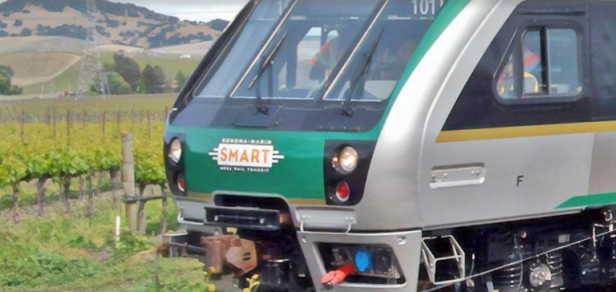 photo credit SMART
A proposal to extend the local sales tax that funds the Sonoma-Marin Area Rail Transit system will appear on both the Sonoma County and Marin County ballots in the statewide primary election on June 2.
On Tuesday, the Sonoma County Board of Supervisors voted to adopt a resolution calling a special election on the initiative measure, which was the result of a signature gathering effort and would continue the existing quarter-cent retail transactions and use tax for 30 years beyond its current 2029 sunset without increasing the rate.The supervisors also voted to consolidate the special election with the primary election.
In January, SMART's Board of Directors unanimously accepted certification of the initiative petitions after the Sonoma County Registrar of
In January, SMART's Board of Directors unanimously accepted certification of the initiative petitions after the Sonoma County Registrar of
Voters confirmed that an estimated 57,418 valid signatures were submitted, surpassing the 53,869 required to qualify. In total, 71,847 signatures were filed across Marin and Sonoma counties, meeting the requirement that at least 10 percent of the district's registered voters support placing the measure on the ballot.
As a citizen-led initiative, the measure can pass with a simple majority vote, which was criticized by one public commenter at Tuesday's meeting.
"Once liberals realized that you could pass taxes with a simple majority just by gathering signatures, they went wild up and down the state, putting tax measures on the ballot with signature gathering," said Michael Hilber, advocating for a return to a two-thirds majority vote. "It makes it extremely easy to pass tax increases. In this case, there was paid signature gathering, and these people were paid $3 per signature."
The SMART District is a regional public transportation district established by the state Legislature in 2002 to plan, own, and operate passenger rail service and a parallel bicycle/pedestrian pathway in Sonoma and Marin counties.
SMART currently covers a 48-mile line with stations from Windsor in Sonoma County to Larkspur in Marin County. The agency holds more than 70 miles of railroad right-of-way in public ownership and plans a full buildout reaching Healdsburg and Cloverdale. The state has identified the U.S. Highway 101 corridor as one of the Bay Area's most congested freeway segments.
If voters approve the measure, funds would be dedicated to operating and maintaining SMART's passenger rail and bicycle-pedestrian pathway network, completing planned expansions, and serving as local match for an estimated $510 million in capital construction projects. SMART reports that Measure Q, the sales tax approved in 2008, has already leveraged $735 million in outside grants.
On the June 2 primary ballot, voters in California will participate in the primary for statewide offices. The June ballot will include decisions on governor, lieutenant governor, and seats in the U.S. House of Representatives and state Legislature. Ballots will be mailed to registered voters May 4.

 NPR
NPR Spotify